
Digital Wellness Box
Mental Fitness
Everyday skills for a steadier mind, at work and at home
Mental fitness is your ability to notice what is happening in your mind and body, steady yourself, and choose how you respond, especially under pressure. Like physical fitness, you build it with small, regular practice.
It matters because stress follows us from work to home and back again, shaping how we sleep, focus and treat the people we care about. This box helps you build one essential mental fitness skill: effective communication.
Your mental fitness skill
Effective communication at work and at home
So much of our stress lives in our conversations: the meeting that went sideways, the same argument at home that never quite ends, and the things we never say at all. When we react, small problems grow. When we notice what we feel and know what we need, we can say it clearly and be heard.
That is why effective communication is a mental fitness skill: it starts on the inside, and it gets easier with practice.
What this skill helps you do
Stop the repeat argument
Name the need underneath instead of blaming, so the same conflict stops replaying at home and at work.
Speak up before it builds
Say what you need kindly and early, before small frustrations turn into resentment.
Be heard, and listen well
A calm, clear request is easier to hear than criticism, and it invites the other person to share their needs too.
What’s inside your box
Five tools to help you practice this skill and bring more presence and care to your conversations, at home and at work.
01
Video lesson
Six minutes with Dr. William Jackson on communicating with mindfulness, at work and at home.
02
Interactive worksheet
Prepare for one real conversation, then download or email your answers.
03
Practice guide
A printable PDF with four practices, the worksheet and two pitfalls to watch for.
04
AI Wellbeing Coach
A free session to find your personalized resources and next steps.
05
$25 gift card
A thank-you from us, to treat yourself.
The video
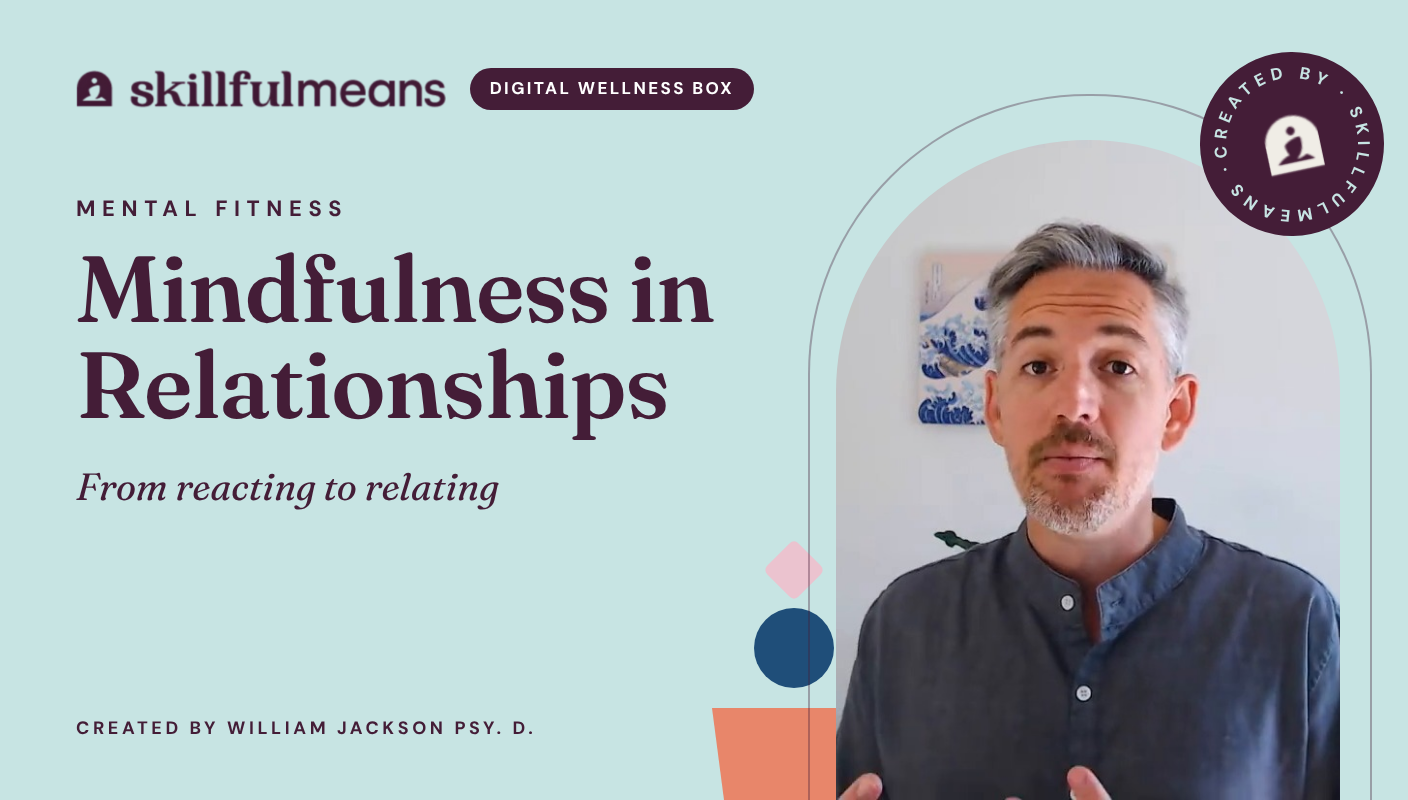
Mindfulness in Relationships
In this six-minute video, Dr. William Jackson, psychologist and former Buddhist monk, shows how mindfulness helps you take responsibility for your feelings, name what you need, and say it clearly and kindly, with a partner, a colleague or a manager.
Four practices from the video
1
Take responsibility
Notice your feelings, thoughts and reactions as they arise, and own them. That is how you take your power back.
2
Recognize your needs
Strong feelings point to a need that is not being met. Find it before you speak.
3
Communicate clearly
Say what you need simply, without the frustration and without the apology.
4
Stay for the hard talk
Feel the discomfort, stay in the conversation, and be patient with their needs too.
What reactivity feels like: the signs
Reactivity shows up differently for everyone, but you may recognize some of these common signs in your own relationships:
Blaming: "You made me angry." "You made me feel this way." When the cause of our feelings always lives in someone else, we lose the ability to do anything about them.
Leading With Frustration: A need goes unmet, and it comes out as criticism instead of a request. The other person feels attacked, defends themselves, and the same argument plays out again.
Holding Back: We stay quiet to avoid upsetting someone or to avoid their reaction. Over time, what we do not say turns into resentment.
Only "Love and Light": Steering around anything uncomfortable, or anyone's "negative energy," can feel peaceful. It also means problems get ignored and the important conversations never happen.
Making Your Partner the Project: "You should be meditating." Encouraging someone's well-being is caring. Blaming the relationship's problems on their lack of practice is not.
At Work: The same patterns show up with colleagues and managers. Unspoken needs become frustration, avoidance, and conflict that slowly wears down a team.
Two pitfalls to watch for
Only "love and light": Refusing anything uncomfortable, or anyone's "negative energy," can look like peace. Over time it means problems get ignored and the conversations that build real connection never happen. As Thich Nhat Hanh put it: no mud, no lotus.
Blaming your partner for not practicing: Encourage the people you love to meditate, move, sleep well, or get support. Making their lack of practice the cause of your problems is not the way. Everyone manages stress differently, and your practice is for you.
The antidote is doing your side. Tend your own practice, notice what you feel, and say clearly what you need. Your happiness and your well-being are your responsibility.
Interactive worksheet
Prepare for one conversation
Choose one moment from this week, at home or at work, that left you frustrated, hurt, or holding something back. Take ten quiet minutes and walk through it. When you finish, download your answers or email them to yourself.
Your answers save automatically in this browser. Nothing is sent anywhere unless you email it to yourself.
- 1
Just the facts, the way a camera would have recorded it.
- 2What did I notice inside?
Name what showed up, without judging it.
- 3Take it back
Rewrite the blame sentence so the feeling is yours again.
INSTEAD OF"You made me feel."TRY"Whenhappened, I felt." - 4The need underneath
Choose the ones that feel most true, or add your own.
- 5What I will say
No frustration, no apology. Keep it short.
"I feel.I need.Would you be willing to?" - 6
What did I notice in myself? What would I keep, and what would I try differently next time?
Keep a copy
Or send it to yourself
Where do you read your email?
Take it with you
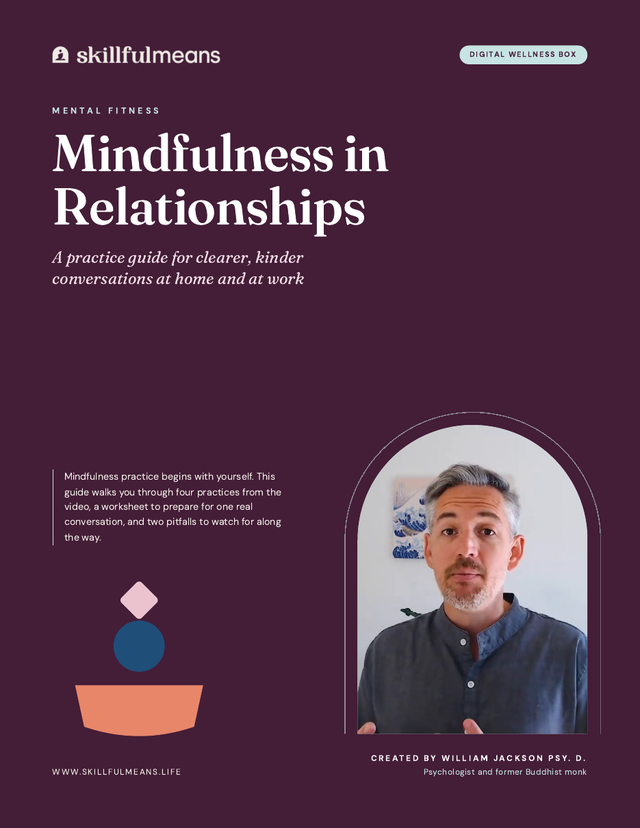
The Practice Guide
A printable PDF with the four practices from the video, a fill-in version of the worksheet, two pitfalls to watch for, and a two-minute daily check-in.
Your AI Wellbeing Coach
Talk it through
The SkillfulMeans Wellbeing Coach is a custom AI coach built on evidence-based therapeutic practices to help you align your actions with your values.
Take 10-15 minutes for your first session to unlock personalized resources and next steps toward your wellness goals.
A good place to start: bring one relationship moment you would like to handle differently.

A thank-you from us
Your $25 gift card
Treat yourself to something from over 70 merchants. Use the button below to claim your card. Questions? Contact admin@skillfulmeans.life

Your guide
Dr. William Jackson
Psychologist and former Buddhist monk
William spent six years as a Buddhist monk before earning his doctorate in psychology at William James College and completing postdoctoral training at Mass General and Harvard. As co-founder of SkillfulMeans, he helps people and teams build mental fitness through practical, evidence-based mindfulness.
Questions? Join the conversation at community.skillfulmeans.life or explore courses and classes at skillfulmeans.life.